If you live with diabetes, your feet need a little daily attention. Diabetes can affect both the blood vessels and the nerves in your legs, so a small sore can go unnoticed and heal slowly. A quick daily check, good shoes and early care for any wound can make a big difference. Here is a simple routine.
Why diabetes puts feet at risk
Over time, high blood sugar can damage blood vessels and nerves. Narrowed leg arteries mean less blood reaches the feet. Damaged nerves mean you may not feel a blister, cut or pebble in your shoe. Put the two together and a tiny injury can turn into an ulcer.
FCCI's president, Dr. Yazan Khatib, co-founded the Save a Leg, Save a Life Foundation to help prevent amputations in people with wounds and complications from diabetes and PAD.
Your daily foot check
Pick a time, like after a shower or before bed, and make it a habit.
- Look at the tops, soles, heels and between the toes
- Use a mirror or ask a family member if you cannot see well
- Look for cuts, blisters, red spots, swelling or color changes
- Feel for spots that are warmer or cooler than the rest
- Check inside your shoes before putting them on
Smart everyday habits
Wash and dry your feet well, especially between the toes. Moisturize the tops and bottoms but not between the toes. Wear socks and shoes that fit, and never walk barefoot, even at home or on the beach. Trim nails straight across or have them trimmed professionally.
Signs to call about
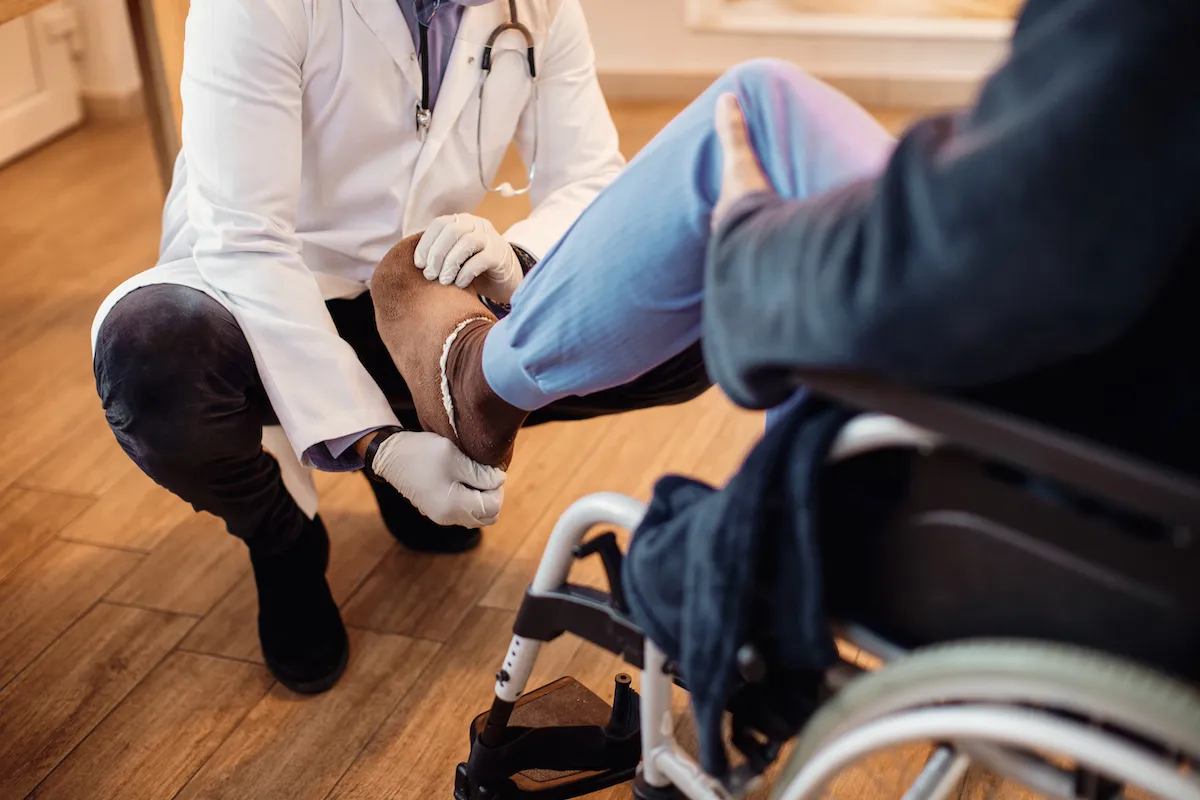
Call your doctor if you see a sore that is not clearly healing, skin turning dark, drainage or odor, or new redness and warmth. Also mention leg pain when walking or feet that feel cold, since those may point to PAD. FCCI's Wound Care Specialists diagnose diabetic foot ulcers and its vascular lab can check blood flow.
Ask about a circulation check
If you have diabetes plus leg symptoms or slow-healing sores, ask your doctor whether a vascular ultrasound makes sense. Finding a blockage early gives you more options.
Wound care and vascular care together
Wound specialists and board-certified cardiologists work side by side at FCCI. If a sore is slow to heal, the team can test for artery blockages and a cardiologist can map out how to restore circulation. Options include hyperbaric oxygen, skin grafts, amniotic membrane therapies, early endovascular treatment and preventative surgery, and Dr. David Swain brings podiatric surgery focused on wound care and limb salvage.
A circulation check uses ultrasound and blood pressure cuffs at FCCI's accredited Non-Invasive Vascular Lab, the only Jacksonville lab devoted solely to vascular testing. Nothing goes in a vein.
Your checklist, on appointment day
Do your usual foot check the morning of the visit and jot down anything new, a blister, a color change, a spot that feels numb. Bring your medicine list, your latest diabetes numbers if you track them, and wear socks and shoes that are easy to take off, because your doctor will want a look.
To book, call 904.493.3333, or 904.644.0092 in Orange Park and 386.325.2836 in Palatka, or use the booking page. Treat this as a starting point, not medical advice from your own doctor. A foot that is suddenly cold, black or swollen with fever is an emergency, so call 911.