Home Diabetes
For YouFor People Living With Diabetes
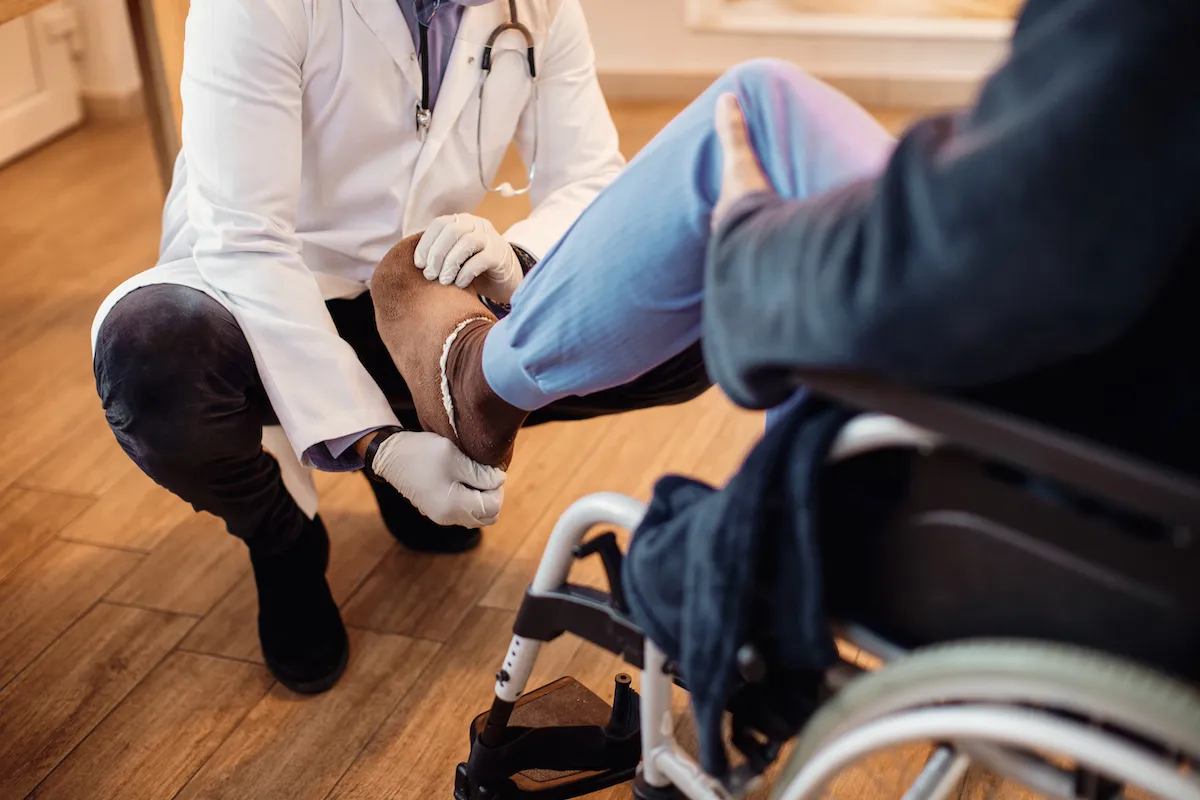
Diabetes raises the stakes for your feet. FCCI's vascular cardiologists and wound care specialists help protect circulation and treat diabetic foot ulcers.
Why diabetes and PAD go together
Diabetes can damage blood vessels over time. When the leg arteries narrow, the feet get less blood, and wounds heal slowly. Diabetes can also dull feeling in the feet, so a blister or cut may go unnoticed. FCCI's president, Dr. Yazan Khatib, co-founded the Save a Leg, Save a Life Foundation to help prevent amputations in people with wounds and complications from diabetes and PAD.
For diabetic foot care, FCCI can offer hyperbaric oxygen treatment, skin grafts, amniotic membrane therapies, vascular testing, early endovascular intervention and preventative surgery. The team identifies the wound type, from diabetic foot ulcers to venous, arterial, pressure, traumatic and surgical wounds.
To get the most from an appointment about diabetic foot care, write a few notes first: your symptoms, how long they have been going on, and what helps. Bring every medicine you take, including supplements, plus your insurance card and ID.
Daily foot checks
- Look at the tops, bottoms and between the toes every day
- Use a mirror or ask a family member to help
- Watch for blisters, cuts, color changes or sores
- Never ignore a sore that is not clearly healing
- Wear shoes and socks that fit well
If you have numb feet, you may not feel a blister or cut, so looking matters more than feeling. A family member can help if bending is hard. Take a photo of anything new so you can show your doctor how it changes.
Questions about diabetic foot care start with a call: 904.493.3333 for most offices, 904.644.0092 in Orange Park, 386.325.2836 in Palatka. Please leave medical details out of online forms and share them by phone instead.
Most patients coming in for diabetic foot care use Medicare, Tricare, Blue Cross Blue Shield, Aetna, Cigna, United Healthcare, Humana (with some exceptions) or another accepted plan. Call and the front desk can confirm your coverage.

How FCCI can help
FCCI's Wound Care Specialists diagnose diabetic foot ulcers and other non-healing wounds. Its vascular lab can test blood flow to your feet, and its cardiologists can open blocked arteries in the outpatient cath lab when needed. Before a procedure, people with diabetes get special instructions about medicines, so follow what the office tells you.
Checking on diabetic foot care usually means ultrasound plus blood pressure cuffs. Nothing goes in a vein, and there is no dye or radiation. Plan on roughly 30 minutes for a carotid duplex or close to two hours for a peripheral arterial duplex, and ask whether yours needs a seven hour break from food, drinks, tobacco and caffeine.
After testing for diabetic foot care, your doctor goes over the results with you and sets a personal plan. It might be walking and medicine, or it might include a procedure.
Book a check
Call 911 if a foot suddenly turns cold, pale, dark or numb, or if you have chest pain or sudden weakness on one side. Otherwise, call 904.493.3333 to book a circulation check or wound visit.
If diabetic foot care leads to a procedure, follow the food and medicine directions you are given. People with diabetes get specific instructions about their medicines.
Part of the team for diabetic foot care is Dr. David Swain, a podiatric surgeon board certified in Limb Preservation and Salvage who volunteers with A Leg Up: The Jacksonville Amputation Support Group.
Care for diabetic foot care can happen outside a hospital. FCCI was the first in the region to offer outpatient catheterization, which it says can lower out-of-pocket costs and make treatment more comfortable. Its Jacksonville lab opened in 2007, Palatka followed in 2016, and both carry accreditation from the Accreditation Association for Ambulatory Health Care.
Should people with diabetes get a circulation test?
Ask your doctor. Leg pain with walking, cold feet or a slow-healing sore are good reasons to get a vascular test.
Does FCCI treat diabetic foot ulcers?
Yes. Its Wound Care Specialists diagnose and treat diabetic foot ulcers alongside the vascular team.
What if I have numb feet?
Check your feet daily since you may not feel a sore. Tell your doctor about any wound right away.