Your carotid arteries run up both sides of your neck and carry blood to the brain. When plaque narrows them, a piece can break off or flow can drop, which can lead to a stroke. FCCI's vascular lab calls carotid artery disease one of the most common causes of stroke, and stresses that finding it early is important.
Stroke warning signs: call 911
If you notice any of these, call 911 right away. Do not drive yourself.
- Sudden weakness or numbness on one side of the body
- Trouble speaking or understanding
- Sudden loss of vision in one eye
- Face drooping on one side
Warning signs that come and go
Sometimes symptoms last only minutes and fade. That can be a mini-stroke, also called a TIA. It is still an emergency and a strong reason to check the carotid arteries. FCCI's lab lists one-sided weakness, trouble speaking, brief vision loss in one eye and a bruit in the neck as reasons a carotid study may be ordered.
The carotid ultrasound
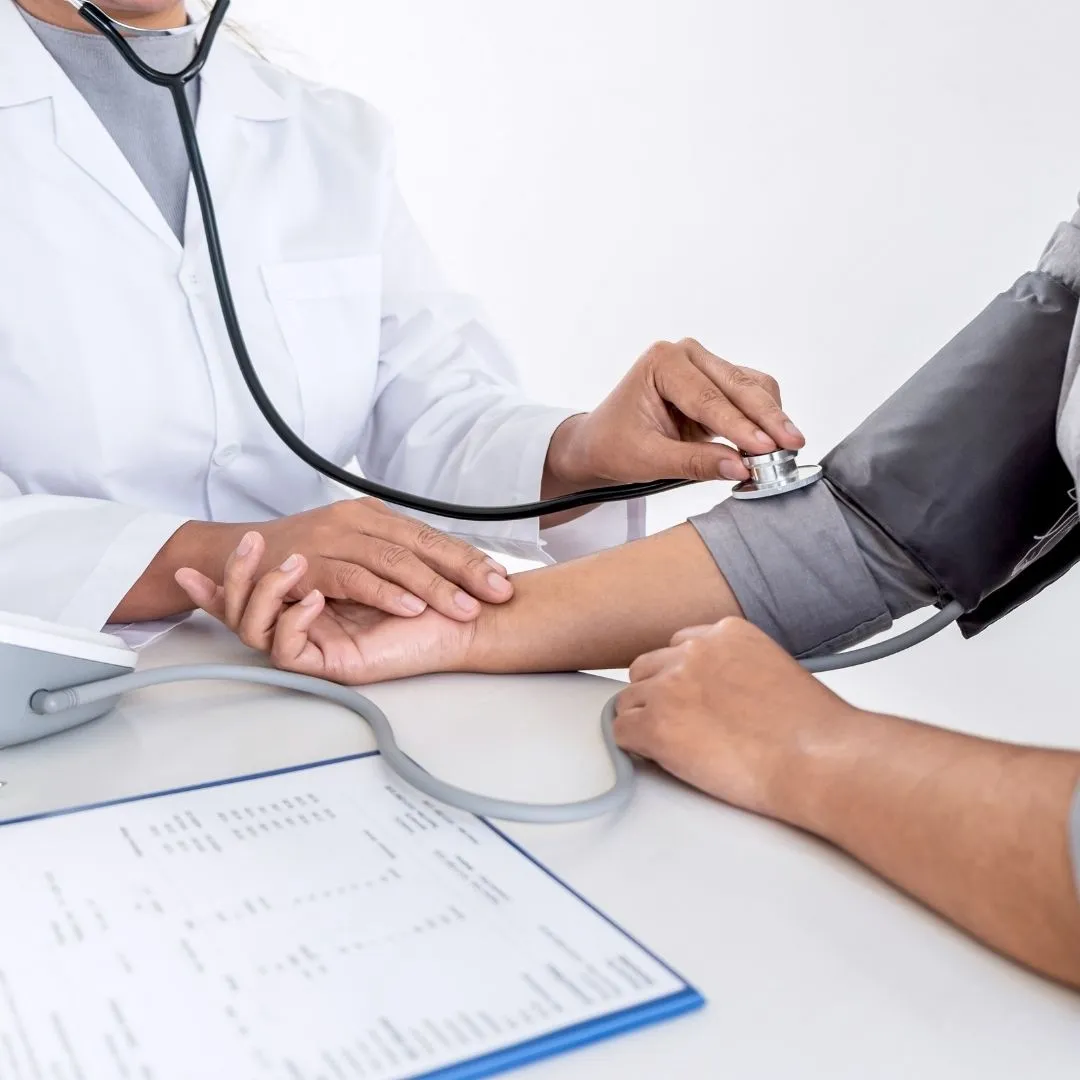
A carotid artery duplex at FCCI measures blood pressure in both arms and scans the carotid, vertebral and subclavian arteries. It usually takes about 30 minutes, is painless and needs no special prep.
Who should ask about testing
Talk to your doctor if you have had stroke-like symptoms, if your doctor heard a bruit, or if you have PAD or heart disease, since plaque often shows up in more than one place. Smoking, diabetes, high blood pressure and high cholesterol all raise risk.
Treatment options
Many people are treated with medicines and lifestyle changes. Some need a procedure. In FCCI's cath lab, carotid angiography lets the doctor see the arteries of the head and neck to treat and prevent stroke. Dr. Youssef Al-Saghir trained in neurovascular and carotid interventions at the University of Utah.
Where the scan is done
Carotid ultrasounds happen at FCCI's accredited Non-Invasive Vascular Lab, the only lab in Jacksonville focused only on vascular studies. A carotid duplex takes around 30 minutes, with no needles, dye or radiation, and your doctor reviews the results and builds the plan with you.
Why patients choose FCCI
FCCI has cared for Northeast Florida since 2002, with offices in Duval, Clay, St. Johns, Putnam and Ware counties and seven cardiovascular accreditations. It works with Medicare, Tricare, Blue Cross Blue Shield, Aetna, Cigna, United Healthcare, Humana (some exceptions apply) and many others.
Before the appointment
If you have had a neck scan or other imaging somewhere else, bring the report or ask that office to send it, since comparing over time helps. Note any episodes of weakness, speech trouble or vision loss, even ones that passed quickly, along with when they happened.
Call 904.493.3333 to set it up, or 904.644.0092 for Orange Park and 386.325.2836 for Palatka. The booking page is another way in. This page is educational, not personal medical advice. And if stroke signs are happening right now, stop reading and call 911.